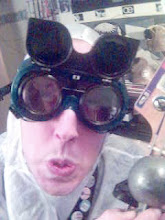
Tuesday, December 10, 2013

Internet (not my) problems

...So I write this blog on 'blogger.' A site purchased by Google in 2003. Now Google is not exactly a company without blood on its hands, despite the fluffy advertising, their 'fun' offices etc. Their biggest fault appears to be privacy - http://www.precursorblog.com/node/1647 Though as their revenue is routed through Ireland I guess I cannot complain: http://www.guardian.co.uk/technology/2009/apr/20/google-uk-tax-avoidance . Though as Google continues to gobble up companies like a hungry caterpillar eats junk food we are pretty much all using it if we go online - especially as it is still the best search engine out there, and has been since I remember first using it with a sense of joy in 1999. They are even planning on dominating the browser market with their ongoing massive promotion of Chrome and withdrawal of the advertising slot on Firefox. I started this as I wanted to point a finger at Amazon, like Google setting out to monopolise the online goods sector. It, like Paypal (more on this later) has its financial base in Luxemburg in order to avoid Tax - http://www.guardian.co.uk/technology/2012/apr/04/amazon-british-operation-corporation-tax, but like rich people who set up offshore accounts you can't really blame them for being so rich and powerful the can afford to do stuff like this - it is really up to us and our Governments to get together and make them pay their fair share, while showing our distaste for such attitudes by finding alternate retailers. However here is another problem Ebay, the monopoly auction site (which has a significant 'buy it now' online retail sector that is competition to Amazon marketplace), its international base in Switzerland, completes most of its transactions through Paypal, the monopoly online payment system/bank, which it bought in 2002, and has been based in, yes you guessed it Luxemburg, since 2007: http://www.newstatesman.com/business/technology/2012/10/ebay-accused-tax-avoidance.

Now I had my fingers burned as an Ebay seller a few years ago so I boycott both Paypal and Ebay, but given the monopoly on selling second hand goods that ebay has it is pretty frustrating. I sold some cherished toys to a buyer, neglecting to offer registered postal delivery - despite paying for insurance I sent the item, worth about £300 unregistered - two days after posting the buyer, realising my error and knowing a loophole raised a dispute, had his paypal payment reversed and claimed to not have received his goods, despite never contacting me to see when and how it was sent. I even had proof of postage which I believed was enough to protect me and make the buyer liable as they did not pay for recorded delivery - this was not the case so the buyer got his goods for free, and I had to get a my insurance claim from Royal Mail - essentially the UK taxpayer. Despite leveling a complaint to the Financial Ombudsman about this issue where I felt Ebay and Paypal were failing to close a buyer loophole this was all upheld, hence my ongoing boycott.

Amazon is and has become even more of an ever growing virus of business as the online retail sector grows, and it seems to be following the 'No Logo' rulebook of cheap labour: http://www.independent.co.uk/news/world/europe/amazon-used-neonazi-guards-to-keep-immigrant-workforce-under-control-in-germany-8495843.html
Without Google, Ebay, Paypal and Amazon it is often difficult, more expensive or time consuming to find what you want on other websites or, if anyone still does this, from shops in the real world. Without Facebook we feel it would be impossible to know what is going on in our Friend specific world. However with Facebook floated on the stock market it is now increasingly clear that the company is looking for income streams, and it looks increasingly likely that popularity will be something that needs to be purchased, and that your network of friends will no longer see your posts due to fancy algorithms that decide how valuable your posts are to Facebook in terms of generating user input. An apparently free method of promoting events, sharing your music and communicating with people, friends and acquaintances has already become a business based on user input - that is people generating content that other people want to see or use - the same as Youtube (owned by Google), bandcamp, Last FM, Vimeo and among countless others all the blogging sites that exist.

The internet was a beautiful vision of pure freedom, of fair trade and commerce, of unrestricted information, crowd sourcing, user based content and collectives of like minded people.
Instead it is rapidly becoming the terrifying microcosmic mechanism of monopoly and control that it was feared it could become. Sites can track you, massive corporations can follow your purchase history, profile you, your identity can be easily stolen. It all makes entities like Anonymous and the Gay Nigger Association of America understandable. Despite all the progress and usefulness of the internet it often feels like life was somehow better before... And so I have decided to move my blog to a more independent blog community like Wordpress...   

Sunday, February 17, 2013

How 'The Foals' and Damon Che managed to kill math-rock...(Almost).

I remember them. 2004? Supporting Oxes and Part Chimp at the Windmill in Brixton. The technically excellent Edmund Fitzgerald (Jack Bevan, Lina Simon and Yannis Philippakis), bright young things of the UK math-rock scene. I remember Yannis's complete disregard for mosh pit etiquette, doing that thing people who understand such things cannot stand - thrusting your elbows out in an attempt to crack ribs and chin those trying to have a good time. I remember you Yannis, during a show at Bardens Boudoir with the re-formed (and totally disappointing) Don Caballero when, like some sycophant hanger on you got backstage to hang out with the band. Oh the heady days of hanging with the 'stars,' of playing and forming bands, of seeking the 'new sound.' With obscure influences, 'The band’s musical influences are varied, with the band members citing minimal techno, Arthur Russell, the Irish based math rock band The Redneck Manifesto, Krautrock bands such as Harmonia, and Talking Heads as well For London (previously known as The Jester People) as their main sources of inspiration. Their musical style, however, can be more directly linked to various genres such as math rock, indie Rock or New rave,' and Dave Sitek recording them in New York it seems the blending of private school education, parental support and a little talent has given the Foals success with an ultra cleaned out, commercial sound that is merely modern, high-in-the-mix vocal driven pop with afro-beat rhythms. In fact they now sound like a really bad version of 'Saturday Night' era Bee-Gees. Che had meanwhile destroyed all credibility for his reformed band - this was not Don Caballero, with layers of unpredictable guitar sound, brilliant syncopation and incredible tension and unrivaled complexity of structure all worked around Che's brilliant, tribal, Ginger Baker complexity meets John Bonham loudness drumming. This was Don Caballero, playing what sounded like covers of their old (good) material with new songs just derivative hard rock. Deeply disappointing and an obvious cash-in rather than an attempt to push the good name of the band in new, interesting and creative directions. The Slint reformation and cash-in had similar overtones, however Slint was essentially all original members, and as they never played any post Spiderland shows in the first place they were certainly entitled so some amount of cashing in on the album that effectively began the genre of not just 'post-rock' but also 'math-rock' - a fact that most so-called math-rock bands would do well to examine. Both terms refer to taking rock music and doing interesting things with the genre - going beyond 4/4 beats and loud guitars. My issue is not with selling out per se, it is with the soulless denigration of a useful categorisation into meaningless, and frankly poor, pop music. As Kurt Cobain would have said "Where are the songs?"
Oxes resolutely did not sell out - one of their number moved to Italy - they still get together occasionally and sound just as good as they always did. Part Chimp have adapted to the UK scene, playing sporadically and releasing possibly the best UK LP and 7" of the past five years in Thiller and You Decide respectively. Yannis would next be seen snorting coke onstage at an ATP performance in the UK. What a guy. They did say that they wanted to have more "fun making their music". With young fans following his every move, with Foals covered in NME, winning awards and sound-tracking episodes of Skins this guy is just appalling. He was an asshole in 2004. He's still an asshole now. And what is the significance of the name Foals. Isn't that just the name for a baby horse. Why the fuck should I care about what a baby horse is called? 
'The Thick of IT - Malcolm: "A pony isn't a baby horse. It's a foal. A fucking foal is a baby horse."'


Shelf-Stacking beats Geology / Killer Whale Kills Trainer

http://www.bbc.co.uk/news/uk-politics-21490542

Funniest thing so far this year. According to Ian Duncan-Smith Terry Leahy (former CEO of Tesco and effectively the inventor of the free marketing information device - the loyalty card - where customers give ultra cheap, free and accurate marketing information to companies) came out of his mothers vagina stacking shelves (certainly puts his input into Tescos in context) and that 'many "smart people" overlooked the importance of effective shelf-stacking' - I don't know about you, but I'm always quite relieved to find things to buy on supermarket shelves - though I wasn't aware one could do it any more effectively than actually putting things on the shelf rather than the opposite - not putting things on the shelf. Is Geology more important than stacking shelves? Without Geology the supermarket would probably have been built on a peat bog and have sunk, or a build up of methane would have blown it up - both effecting OECD statistics negatively. Also when a court of law says that something that obviously is forced labour actually is forced labour I guess it's not that surprising to hear an unforced Conservative saying that it isn't. I like the fact that he treats 'emergency regulations' like a terminally ill dog (particularly in the context of 'Poundland') - '"I've already put emergency regulations down, and that's ended it," he added. '

I also like the way unemployment benefit or 'the dole' as it used to be known has changed from being money given to those without work so they can exist, to being money given to people who can actively prove they are looking for work (the clue being the word 'Jobseeker'), to being pay for working at Poundland - which surely then stops it actually being a benefit at all, but rather a new minimum wage - right? He then actually apologies - not for his 'slavery for corporations' policy, but for that fact that people don't want to be slaves - Smith states, 'I'm sorry, but there is a group of people out there who think they're too good for this kind of stuff,' - you know people like Spartacus, and the entire African-American population of the United States. Apparently, without any evidence, and having done no research 'most young people love" their work experience placements.' Hmm, stacking shelves in Poundland, I have some doubts here...

The imaginatively titled 'Back-to-Work' scheme is apparently the government's "most successful," ahem, back-to-work scheme, he said: "It's been so successful that over half of those kids have left benefits." Assuming he doesn't mean 'behind on the bus' or 'to their next of kin' I'd say it is certainly the only 'back-to-work' scheme that I've heard the Department of Work & Pensions implementing, so it clearly doesn't have much competition. He fails to mention what those kids who have left benefits are doing now? Living off bank on mum? Life of crime? Suicide? 'The scheme had been launched to help young people trapped in a vicious circle where they could not get a job because they did not have any experience on their CVs,' now they're trapped in a vicious circle where they could not get a job because they were working for free in a job where the employer is paid by the taxpayer to employ staff and pay them nothing thereby negating the need for that employer to employ paid staff and create jobs. Following on, 'once you commit to doing that programme, because companies have to make arrangements around it, then if you don't do this you may suffer a benefit withdrawal because you have messed them around and they are therefore going to suffer as a result of that."It's a point that anyone out there listening to this will know. You have to learn early that if you commit to something, you stay and do it,"' (like studying at the University per Stranieri I suppose). This implies that employers will be really suffering as a result of losing one free labourer, like they are not used to a high turnover of staff anyway - whereas an individual, without even a basic safety-net, must put up with this belittling experience regardless of their feelings about the experience. This is akin to saying - 'you are an out of work dole scum - work for nothing or we'll make you homeless - your opinion is of no interest to us' - a direct contradiction of his previous anecdotal point about young people loving their work placements.

In this interview he completely fails to acknowledge the DWP's total incompetence in failing to provide adequate regulations to back up this appalling policy, he fails to address the fact that Miss Reilly was doing socially beneficial voluntary work (Big Society anyone?) that has some relevance to her degree that she invested 3 years hard work and tens of thousands of pounds to achieve - surely something that should be commended in a modern society rather than denigrated as being wishy-washy due to not being Economics, Business Studies, Science, Medicine or Engineering, and, fatally, that she was incorrectly told (probably by an unpaid work-placement young person at her job centre) that the work placement was not compulsory. All amusing give the fact the IDS doesn't seem to know what qualification he actually has or where he got them -
http://www.bbc.co.uk/pressoffice/pressreleases/stories/2002/12_december/19/newsnight_ids_cv.shtml 

Appalling treatment like this occurs every day as the DWP and hence Job Centre Plus does not have a handle on how (or an incentive) to help people get back to work, and it seems IDS's only interest is giving corporations free labour while creating a narrative that the Conservatives are forcing those 'scroungers' to work for their money like performing whales trapped in a more depressing version of Sea World. Which is saying something. Slave rebellion anyone?
http://www.break.com/usercontent/2010/3/5/sea-world-killer-whale-kills-trainer-video-1769392 

Tuesday, February 12, 2013

Music Journalism

'Its adventurous structure alternates between melodically rich verses and powerful instrumental interludes, essentially passing the torch to Googe and drummer Colm Ó Cíosóig when she clears way for a spine-tingling solo of clanging distortion' (http://www.obscuresound.com/albums/my-bloody-valentine-mbv-2013/)

'Indeed, primitivism is a reoccurring theme for IBG, both in the sense that their music is an obvious devolution of the conventions of rock music and also simply because their songs are gargantuan epics which inspire images of rumbling volcanoes and thundering dinosaurs trudging across vast swathes of borderline ineffable terrain.' (http://pocketjury.net/2011/09/im-being-good-mountain-language/)

Before I start into a torrent of swearing, lets just discuss the state of music journalism at this moment (specifically the UK, but this is pretty universal I think). Magazines like NME and Kerrang continue to plough their furrow, but with dwindling sales and the ongoing switch to online it is difficult for these formerly ubiquitous publications to produce good quality reviews, articles and interviews and it is also increasingly difficult for them to made significant dents in record sales and downloads, wheras there was a time when a front page meant a dramatic rise in sales and a dedicated fanbase this is not necessarily the case anymore. The schism has continued, and can in alternative music terms be traced back to Everett True's move from NME to Melody Maker, whose subsequent demise led to NME's monopoly of the broadsheet music press, an untenable position as without competition quality declined. True's subsequent decreasingly excellent magazines Careless Talk Costs Lives and Plan B saw a dwindling readership further alienated by esoteric articles, obscurantism and just plain high-brow Nathan Barleyism. We are now faced with an array of poorly produced, largely locally produced glossies and papers like Stool-pigeon, Bristol's Crack magazing and Fear of Fiction, the dominance of shock mags like Vice and a bewildering cornucopia of online blogs and forum things like Drowned In Sound that now live on user generated content. There is apparently no professional 'alternative' music journalism. What we now have to put up with is apparently the above style of infantile hyperbole and extravagant metaphor alongside attempts to describe the music using a hopelessly inadequate vocabulary that as it speaks seems to fear alienating the reader before seeking out a turn of phrase that hopes to impress. What is even worse is when a blogger tries to give a track-by-track description of an album, after a paragraph or two introducing the biography of the band before finally summing up the album in a neat phrase. Please spare me. Not only do I not have time to be bothered to read such effable air, I am irritated that someone took the time to do so, and post it on their blog for all to read. The case study here is the recent release of My Bloody Valentine's third album 'mbv.' So keenly awaited was this that the moment the band streamed it on youtube (in low quality format) then blog reviews started appearing. The band's website is offering preorders of the LP, and state clearly that pains were taken to record, mix and master the album using analog technology. Therefore any non-analog reviews cannot be regarded as having listened to the album 'properly' in the first place, so it appears that the main motivation for putting a review up so soon is to get traffic visiting your blog. How can this kind of motivation be conducive to good writing. I'll admit my blog is not as thoroughly researched or edited as it could be but its point is to be spontaneous and free. Besides anyone who begins a sentence with 'Indeed' wants shooting. In the foot. So it'll take them ages to die of loss of blood. Assuming I don't resuscitate them to prolong their agony indefinitely.

See also: http://www.thestoolpigeon.co.uk/features/news/an-a-z-guide-to-music-journalist-bullshit.html

I wanted to get this rant out of the way so I can have a go a writing my own music blog, on my own terms - and I want to avoid all the bad elements I have described above. Thank-you.

Monday, January 28, 2013

Snowmageddon

Let it snow, let it snow, let is snow...No. Sometimes I think the UK media is close to realising its power to manipulate the population, but like a hive of bees or nest of ants it finds itself too unwieldy to exert its true power to transcend its existence and evolve to a higher form. This month I have noticed, despite being really busy, that the UK has had some snow (as I believe it had last year, and certainly did in 2010 and 2009. In fact I believe snow has occurred with some regularity, going right back to the last ice age ). You would expect that after a few years of significant winter snowfall that the novelty would wear off, that airports, councils and traffic agencies, like most private companies , would have been prepared for it. In the main it seems they have; football matches went on unabated, the country did not come to a grinding halt, but wait - on facebook many people in the UK seemed to feel the need to post that it was snowing - like it was something hugely exciting and out of the ordinary. This tendency was apparently stimulated by a similarly overexcited media reporting that people should all 'stay indoors, and only travel if it is absolutely necessary' like there had been a chemical leak or something. Ian Hislop blamed the media for creating 'snowmageddon,' and he was not wrong, like a feeding frenzy the media take up the idea and run with it for as long as possible. Countries that often have snow, like Switzerland, certainly enjoy it, and enjoy a certain amount of childish excitement about it, however their response is measured and reasoned, they have cars with a specific 'snow' setting, they go out prepared for what can happen with snow, they are respectful, and most of all their Cantons take the clearing and gritting of roads seriously, with the knowledge that the people expect everything to carry on pretty much as normal, with the exception of extra precautions and care taken. Another key factor is that Swiss roads, pavements and drains are professionally constructed, to a much higher standard than the pothole ridden, poorly maintained highways of the UK. Swiss roads and pavements are flatter and tougher and are much easier to clear of snow with snowploughs and periodic gritting, even at temperatures at -20. Media reporting of snow is kept to the weather report, and off the main news and discussion programmes, as it is no big deal. The UK should learn a lesson. It seems the problems are caused by a culture of people not wanting to take responsibility, extra care or precautions in a snow environment, so blame can be apportioned. The media gets sidetracked by its childish glee, forgetting its social responsibility and the effect it has in creating panic and irritation. Like an ant colony that has found some honey, it cannot and will not be stopped. But I find that the UK public on the whole should understand that their media cannot be trusted any longer (post-Hutton report, post-phone hacking,  post-Saville) and start taking more responsibility for their own lives. And actually go out and enjoy the snow properly rather than sending their crappy photos of snowmen in to crappy TV shows...
See:
http://newsfeed.time.com/2013/01/21/why-is-europe-still-so-unprepared-for-snowmageddon/
http://www.guardian.co.uk/world/2013/jan/21/snow-school-closures-travel
http://www.bbc.co.uk/news/uk-politics-21195257
    

Tuesday, January 15, 2013

And Start West

Ireland. The Emerald Isle. The home of stereotypes, potato blight, leprechauns, lucky charms, stout and the colour green. Thoughts of Irish culture recall Swift, Wilde, Yeats, Joyce, Beckett, Stiff Little Fingers, The Undertones, Therapy?, MBV,  and Father Ted. Unfortunately Riverdance, Colin Farrell, Westlife, Boyzone, U2 and Susan Boyle are there too. More recently there is the Rubber Bandits:
 
who seamlessly manage to blend all these elements into one unpleasantly catchy whole.
My first week in Cork, the Republic of  Ireland's second city, located on the south coast to the west of Dublin has been okay. It is winter and when you are near the coast, in damp air, it feels colder - I was out in minus 20 in Switzerland and it feels worse here at minus 2. Houses are poorly built (unlike Switzerland, and a little worse than the UK it seems), our rented house has no loft or cavity insulation so it acts like a big fridge. It doesn't help that electricity and gas prices are super-high too.  Post economic crisis everything is super expensive, worse than in Switzerland for a number of reasons as I see it: 1. Infrastructure: There is no effective train network here, the bus system is hampered by a bad road system and is overpriced. 2. Everybody drives - more so than the UK even, despite a road tax system that penalises emissions, a car is required if you want to travel anywhere conveniently - therefore there is no drive to improve public transport. 3. Tesco's. Tesco has a monopoly on out-of-town, 'low-cost' supermarkets, so their version of 'low-cost' means competing on some lines with Aldi, with everything else priced however they want it to be - no Sainsbury's, Asda, Waitrose or Morrisons here. Also, quality is poor too, as it is generally with Tesco's in the UK, and totally unlike the great quality of the cooperative supermarkets in Switzerland. Luckily there are numerous health-food shops in Cork so being a vegan is not a drag, though is super expensive, despite this nascent competition.

My first record shop experience nearly made me cry. I was taking my daughter to a lunchtime family cinema screening of a french film (The Life of A Cat) at the local art centre - a beautifully converted church, that has a record shop incorporated: 'Plugd'. Walking up the ramp with my daughter the record shop guy actually acknowledged me and my daughter, saying how great it is to have all theses kids coming in the shop, he then approached me and my partner and daughter, being friendly and asking what kind of music we're into and where we had come from. I checked out the selection - Tortoise, Trans Am, Ox Scapula, Don Caballero, Rudimentary Peni - just some of the great LPs I picked out. Very emotional. In the UK a record shop guy usually sits behind the desk staring at his feet while playing some ultra-hip god-awful rubbish, and responds to questions either with grunts or a sneering, cynical look like your question about an Amon Duul II record was like you farting loudly in their direction. Not so here, and I look forward to my next visit...must check out the book shops too... 

End of Year Lists

LPs:

Yowie - Damning With Faint Praise

Azita - Year


Aleuchatistas - Heads Full of Poison


Pinback - Information Retreived

Stopped Clocks

The Big Oaks - Monster Turd

birdbath - Black My Light


http://www.inguerecords.com/shop.html

Peter Kernel - White Death Black Heart

Eftus Spectun - Turtus

Xaddax - Counterclockwork


Movies:

Holy Motors


Cosmopolis

Books:

Observed While Falling/The Lost Art of Ah Pook - Malcolm McNeill

Rub Out The Word (Letters of William Burroughs Vol 2) Bill Morgan

Live:

Yowie - Croft


Dirty Three - Trinity

Jason Lescaleet - Cafe Kino


Cove - Stag & Hounds

Dead Rider  - Exchange


His Naked Torso - Cardiff

Wednesday, June 20, 2012

Music - response to Emily White and David Lowery

http://www.npr.org/blogs/allsongs/2012/06/16/154863819/i-never-owned-any-music-to-begin-with
http://thetrichordist.wordpress.com/2012/06/18/letter-to-emily-white-at-npr-all-songs-considered/
As I see it there are several balls in play on this issue. First is the decline of the 'record industry' that has seen A&R men going from the Ritz to the Travelodge. This is of course the result of the decline of physical product, but I would also posit that it is also the result of mismanagement: a failure to cope with change, to keep up with music tastes, to detect new revenue streams, to rationalise and restructure effectively. Now mainstream, major label music hasn't changed that much (apart from homogenisation), but several things changed over the past 20 years that have effected the way both that music, and the independent music community that (eventually) feeds and stimulates the mainstream. Things like the ease, speed and availability of downloads (often free via download sites like mediafire), the availability of information on music from sites like Wikipedia, people downsizing their possession of music (from hi-fi systems to cds etc.) the ease of purchasing hard to find music physically (ebay), mp3s (itunes) or both (amazon), the decline in record stores (both good and bad - some assistants were there to try and make you feel small, others tried to help you make buying decisions. Buying a record was often more about the cover than the music, or what friends you were with), the rise and fall of MTV (it killed off institutions like Top of The Pops and the Singles chart, though by splitting itself between genres and channels it has overspecialised and lost out to the internet), diffusion of radio stations thanks to digital and online radio (and the death of John Peel) so people don't really use the radio to discover new music anymore, increased revenues for established acts touring (leading to much reforming of the likes of Led Zepellin, Black Sabbath, Stone Roses, Happy Mondays etc) with small venues and bands dying out due to people preferring to stay in to surf the net for music rather than go out to discover it for real (Aids Wolf splitting up, Newport TJs closing down). Certainly in the UK and US this has resulted in the record companies taking less risk, there being fewer 'scenes' developing, and there being less exciting underground bands and music, all of which meaning the mainstream is even more stale and uninteresting than it has ever been. Just look at X Factor etc. This is a problem for all forms of music as a stale mainstream means fewer music fans in general, less opportunity for new artists or sounds to emerge (it is over 20 years since Nirvana), hence a crisis for, and homogenisation of, music. Fear of risk is a monumental problem that results from falling revenues. Promotion of bands and hence band success is also based on labels taking risks - less money=less risk=less good music.
HISTORY LESSON: I can remember downloading on napster for the first time back in 1997, I think it was a Slint live recording that contained a cover of Neil Young's 'Cortez the Killer.' It took hours using dial-up with numerous dropped connections and crashes. Now you can find and download an album (legally or illegally) in a matter of seconds, but then there were no legitimate sources of mp3s, if you wanted music on your pc then you had to rip cds. This was a period of transition from tape to cd. I had many hundreds of tapes of copied albums, mixtapes and John Peel shows - either copied from friends, the radio, or my own cds or vinyl. I partly did this transferring to tape so I could play albums in the car, but also so I could see if I liked a band a friend liked - if I did I would often buy a copy, as a tape copy offered inferior sound quality. Again the process took ages, and tapes were easily chewed or damaged so when cd burning appeared it was a revelation. However in the early days this was also time consuming and often the CD-R's wouldn't play in hi-fi cd players. All this copying was for personal use, and often was because I could not find a copy of the album at my local record store (remember them?) or they could not order it in for me. Amazon/ebay had not taken off and many bands/labels did not have a website. So that was my music collection - numerous vinyl, tapes and cds (including bootlegs) bought from record stores, gigs or via mail order (Southern Records had an excellent service), probably an equal number of copied tapes, plus a few mp3s of rare or hard to get songs. I do not consider my actions piracy (despite it technically and legally being seen as such) as I was backing up my records to another format, and obtaining music I could not have otherwise listened to. Over the years I reduced the tapes and CD-Rs thanks to amazon and ebay enabling me to obtain harder to get hold of material (albeit usually second hand - no money to the band there), though with the reduction in cost of hard drive storage and increasing time spent online it made sense to rip my cds. All this makes sense as physical storage space is increasingly at a premium in these times of higher population, where people like to have everything on a convenient hard-drive (or even in the cloud) rather than having the pain and expense of carting round piles of lps. 
The rise of convenience of being able to pretty much download any album ever made in a matter of seconds (pretty much for free), with cheaper computers, storage and internet means it is no surprise people have made the switch. Not so long ago middle aged men were putting classic lps into landfill to replace them with cds - then the cds replaced with mp3s.  The problem with this (sort of) non-physical media is that the sound is inferior to vinyl (as Steve Albini will assure you), and you don't get (all) the carefully selected by the band artwork. Now companies will try and assure that mp3/flac etc are great quality formats, however the average punter doesn't care about any of this, they just want to possess the MUSIC - that is the sounds that come out of their player that their ears hear. Possession is important here as often the average punter may have heard the song at a club, gone home to find it, downloaded it illegally, or avoided possession altogether by streaming it from Spotify, then never listened to it again. Spotify is really wrong as it pays so little to artists, though it does allow people to hear albums in their entirety so punters can decide if they want to buy it. The problem is that most people (like Emily) are quite happy to continue listening to it on Spotify as they don't have to pay for it and it is the same quality as if they had downloaded it. The point is some people can and are prepared to pay, however many have learned that not paying is more convenient and the norm - this needs to change.  Psychology plays a part here too as people are fickle - one day they may be willing to buy an album, the next they may not - I can remember going into a record shop several times and looking at the same record each time debating whether I could afford to buy it but also whether I really wanted it - being able to download it and listen to it properly (not 10 second samples) would have helped. I know sometimes it is nearly impossible to wait for a new album by your favourite band - I have downloaded an album (on itunes) that I had pre-ordered from the band because I couldn't wait Some music lovers will go out of their way to buy vinyl direct from a band because they know that their money will go toward helping that band make more music or go on tour and that the record will sound better than mp3. Happily bands are putting mp3 download codes with lps so fans have an instant back-up they can listen to on the move. This is great and the way to go. It is also okay that mp3s are emailed around between friends as the sharing of music is often the best way of people discovering new music, as I did with mixtapes from friends. Even downloading something illegally from a dodgy site is acceptable if: a) every other legitimate means of hearing the music has been exhausted, b) the band/label are defunct/album is out of print and stupidly expensive second hand c) you are a totally skint music obsessive who has to hear something that you know is good an will help you become the next Kurt Cobain.  Point c) is really important here as not everyone can afford new music, and many of you may recall that many great musicians come from deprived backgrounds. Cobain must have copied albums from friends, if he hadn't would he have heard the Vaselines? Would he have produced In Utero? I don't think that downloaders should be blamed or be given a massive guilt trip. The problem has been the sheer speed at which everything got posted to download sites, offering music fans the opportunity of being able to hear every album they've ever wanted to hear at their leisure on whatever platform they wish for free. I would never have enough money to buy all the music I want to, and I consider it a shame that I have to make decision over what to buy. If something is out of print, like the God Machine's 'One Last Laugh In A Place Of Dying' was until recently, then we either have to spend a fortune on a second hand copy or forgo listening to it. The opportunity download sites and bloggers offered real music lovers was often like putting a heroin filled syringe in front of a Junky and saying to them - well this is top quality morphine made by Chinese experts in the field, now you are not allowed to sample it, although if you do the Chinese experts will be killed and no more of it will be made. The only way you can take this morphine without the makers being killed is to pay $10 for it...The junky injects the syringe after the word morphine and ignores the rest. Most real music fans do what they can afford to do to help the deserving independent music industry, it IS up to the record companies, labels, bands, ISPs, search engines and governments to figure out what to do to improve revenue streams. This issue has only come to light after major label albums have been leaked and posted on download sites causing labels to believe they have lost revenue, though I doubt they lost much, if it was only independent artists being downloaded then there would have been no problem. I suggest a clampdown on dodgy download sites, setting up a task force that can check and shut down sites that bands and record companies identify as distributing their music illegally, record companies should join forces like pressure groups (rather than remaining divided and conquered by middlemen like itunes and spotify) and should look into working with download and streaming sites as ways of distributing and advertising their artists, bands should do the same with bloggers ( a fine example of this is http://www.shinygreymonotone.com/ ), ISPs and search engines should block dodgy download sites and Governments should look again at copyright and internet legislation and its enforcement so that artists (a vital part of our culture) are protected as is the record industry (a vital part of the economy), and that download/filesharing sites give some of their revenues back. If none of this happens then record companies will be schlupped by itunes and spotify who will be able to sign, market and distribute artists direct.

Film is part of this equation too as without Hollywood Megaupload would not have been shut down. The film industry has homogenised too, as you can see from recent bland and inoffensive blockbusters - even Ridley Scott has fallen into it. People can stream virtually any newly released movie (albeit in generally poor quality) illegally and Hollywood don't like it one bit. The difference between this and music is that Hollywood is a clear market leader that holds a financial monopoly over the industry, and as such can afford to lose a few quid on a movie. Cinemas and independents producers cannot. I am of the opinion that films should be seen in the cinema, however, mainly because of the quality issues watching films online illegally should not be a crime, wheras hosting films by streaming sites should be. Movies are quite different from film though many of the issues are the same, and will become more problematic as technology improves. The rise of 3D has been a direct response as the 'experience' is only possible at the cinema. The problem is most of the films are crappy, and Hollywood does very little to help smaller film producers and independent cinemas, or promote a vibrant industry. If Emily White's generation don't want to pay for albums they sure as hell don't want to pay for films, however the cinema event (like the live gig) is still enough of a draw to keep making money, independents, because their films don't usually get distributed illegally online, have it as tough as it was, though not as tough as indie music labels and underground bands. 
The issue of 'freedom of the internet' appears here again, but as most people have no problem with ISPs shutting down child pornography sites the same should apply here - a law is being broken - enforce it. 
As for Free Culture - there is something called public domain where after a certain amount of time, under certain conditions copyright runs out and material is free to distribute see http://archive.org/ and http://www.gutenberg.org/ and http://www.ubu.com/ for more interesting material than you can shake a stick at. That is free culture. However buying a new album then posting it on your blog for everyone to download for free is not Free Culture, it is stupid as numerous people will now download it free rather than buy it, and your $10 to the band should be sent with a kick in the teeth, as it may be the last album the can afford to make. What I find funniest about these blog posts it that some of the people who download the album show enough guilt as to comment on the blog, thanking the blogger for the post, stating - 'Been meaning to buy this' or 'I lost my copy' or 'the dog ate it' etc. 
As an 'artist' myself, both solo and in a band I totally understand and I'm with Lowery on most issues. It is impossible as an unsigned act to generate any hype, tour, market, record or even practice without investing large sums of money and time into your act. Without large savings you are willing to invest, a solid benefactor or getting signed you aren't going to get your music out 'there'. You'll be lucky to get a few local gigs, maybe a half decent recording and a few friends following you on facebook. We've played many local gigs and unless each member of the band has lots of friends willing to come to your gig it will probably be audience free. Get a popular band to headline and their fans will ignore your performance, as will fans/friends of local support. You will maybe sell one cd (for about £3) to someone who liked your set and cares about music. If you organised the gig you will not get paid. There will never be an A&R man looking to sign unless you play in Camden and are either lucky or a cocaine dealer. The venue takes all the bar money and a cut from door takings for door staff. The headliner came from out of town and needs petrol money. That is probably it. Each member must maintain their equipment, chip in for practice space and transit to gigs. Splits must also be made for recording (£100 a day average) unless you go lo-fi and do it all yourselves, in which case you need recording equipment (not cheap) and loads of time, mastering (£100ish average) and manufacturing. Why you do this you are not sure as you are never likely to sell anything except the one copy at the occasional gig you play to nobody. Still it is nice to do vanity publishing - have a nice cd for nostalgia. All this time you need to work to stay alive and fund all this. As you work it is impossible to tour without booking a holiday, which you need to spend with your family not your band. You try to get a 'presence' online, posting your music to last fm, Spotify, bandcamp, myspace etc, but can't help but feel that this is a bit like giving your hard work and investment away, still you may get some income, fans and sales. No. For all the plays, views and positive comments you still get no money coming in. You are not on a 'known' label. You don't play gigs with 'known' bands. You try and get some publicity - go on local radio, send you record off to be reviewed, invite reviewers to gigs. No one listens to local radio, it is a public service funded by either charity or the bbc, and even if they do they've never heard of your band before so don't really listen (John Peel's show was the exception as people would listen and if your band got played you stood a chance of people checking you out, because John had good taste - there is no equivalent to this now). The reviews come in. Mostly positive but placed in online mags and blogs no one except bands like yours read, only to read reviews of themselves, the only negative reviews occur in the local listings magazines a few people actually do read. The gig reviewer does not make him/herself known at the show and the review never materialises. By this time the band has split due to time/family pressures or internal arguments over lack of progress... 

Look at this link - http://www.greenman.net/unsigned/portlands
this band have spent real money on a professional video, underlined their credentials - headlining a 10000 people festival, mates with Elbow, recorded in the states with name producer 'Press coverage, interviews and radio play followed, including interest from a variety of music promoters and industry representatives.' BBC airplay, headline slots a Manchester Academy, European tour and gushing reviews. Yet this band is UNSIGNED. Not only that they have entered this competition despite having all this behind them. However this is the problem for bands with no backing - how do you compete with bands that risk and invest everything just to get signed - the label get an instant product with fans, records, tours - the lot, all the company have to do is sort out a risk free contract to distribute and promote the record and they should get some return. No label would invest in a band that haven't got these minimum elements sorted, even if their music was incredible. In fact the qualitative element of music was lost a long time ago. 
Unfortunately these days everything is on your computer/phone - your record collection, your bank, your friends, your record shop, you library even your University. People, we need to get out more, and we need to own more real stuff. Virtual 'goods' cost zip in manufacturing - while this is good environmentally it means there is massive profit to be made, and sometimes you just get sick of staring at a screen. 
Bottom line: 
Labels should get together if they feel they are being robbed. There used to be camaraderie between indies like Touch&Go, Dischord, Drag City, Skin Graft etc - what happened?
Bands need to find new models to make their music pay - though it must be remembered that being an artist often means great sacrifice, living in poverty etc. like Van Gogh. Though that doesn't mean it's okay to get ripped off.
Punters need to understand the joy of vinyl and go to more gigs. Get off the computer. 
ISPs need to get a grip, self regulate and stop companies that infringe copyright - and block sites.
Search engines should take responsibility and work with ISPs to stop advertising on download/filesharing sites and block results.
Governments need to update legislation and work with Artists, record companies, labels, ISPs and search engines to deal with these issues rather than doing knee jerk missions like taking out megaupload.
Emily White should not feel guilty for what she has done, though she should understand that the music industry has changed and that not getting any money to bands means that some great bands will never happen now, and that she will will never get a paid job in that industry.
David Lowery (I agree with many of his points) should understand that not paying for music is, and always has been a part of the music industry that should be understood, incorporated and utilised, rather than using guilt to extract money from punters. 

Tuesday, June 19, 2012

Higher Education (response to Guardian Blog)

http://apps.facebook.com/theguardian/education/mortarboard/2012/jun/18/academia-not-stressful-for-me?fb_source=other_multiline&fb_action_types=news.reads
'Personally, I think we need to move away from the narrative of stress and focus instead on the opportunities for fulfillment that academia can offer.' I agree. I hereby withdraw all your funding, double your workload and expect you to teach for free.

The world should be 'preached' to about the value of our work by the Universities, the government and the media. Instead the latter continually berates students for being lazy party animals with rich parents (okay, some are) while the government look to cut funding to Universities and students (who are forced to pay for the privilege of higher education), hoping parents and private investors can fill the void (higher education should be a right for all young people who have the academic ability to be enriched by the experience, benefiting wider society).
(As they are not paid) It is not the job of students to 'preach' Students should study, teachers teach, disseminators disseminate.

Researching/studying is both stressful and joyful. Trying to think up new ideas, interpret difficult texts and write academically to tight deadlines is stressful, hard work. The knowledge that failure is possible and all the time and money invested could be wasted is the most stressful thing of all. That is what people are anxious about.
As someone who sees 'cheerfulness' as somehow opposite to stress you clearly know nothing about the latter.

UK Universities are in general chronically underfunded and shockingly managed (having worked for two, studied at another and seen how things are done in Switzerland). Since the credit crunch in 2008 Universities have purged staff to a shocking degree, generally expecting academic and administrative staff to pick up the slack resulting in higher workloads and less pay. Researchers on 2-3 year contracts have stress, as do lecturers on 2 year probation with REF. Lecturers and professors have the constant threat of redundancy from departmental cuts dependent on academic 'trends' that seem to involve an ongoing shift toward 'business studies' type courses and Mandarin at the expense of Humanities subjects that are at the core of our cultural identity. I have seen professors go blind with stress.

What is most worrying is the Conservative focus of your post. It seems to be heading towards 'Big Society' territory, implying that it is right for students to pay for the joyful experience of higher education, and perhaps that teachers should do so for free as well as it is so much fun. The government has already tried to make public librarians volunteers so this is not so far-fetched.

(I am final year distance learning PHD (who loves his subject) at a supportive University, with a 2 year old child and working a 4 day week).

Tuesday, June 5, 2012

Community, Education and UK news

It has struck me, since I have been living in Switzerland, and since I will soon return to the UK, that people here live and function in communities far more effectively than in the UK. Most of the housing here is made up of four or more floor blocks of flats (even older houses like the one pictured appear to house several families), that are predominantly rented, unlike the UK's dominance of private ownership and individual family homes of two or more bedrooms in mainly detached suburban estates. The city here is very compact, with far less suburbia leading to a greater sense of community, less reliance on cars and out-of-town shopping centres. That is not to say that such things don't exist, they are just less of a focal point and offer less of a threat to established, smaller, high quality shops.
The education system is also completely the opposite of the UK. Private education is the inferior sector here as because the state system is so good and well funded that only pupils who fail their studies or drop out are forced to pay to complete their education in the private sector, which somehow seems fairer, and makes sense. In the UK not only is private education better, but only the rich can afford it, AND the sector has charitable status so gets tax breaks. Failing pupils are bounced around the state system and are failed by it. After primary school pupils already start to specialise into ability and career path, something only begun at 13 in the UK. They are divided here between academic and vocational. There are also in most cantons, unlike the UK, several different schools depending on attainment level. Also the A-level equivalent system is much harder, with a much greater emphasis on languages, typically at least two having to be studied.  
Every so often I have been checking back on the BBC news website and Guardian to 'keep up to date' as it were and I've been feeling increasingly distant from events in the UK that no longer seem relevant to people's real lives. It could just be living at a distance but the UK government seems increasingly out of touch although there seems to be no real opposition to what they are doing (despite it being apparent that Labour are saying the right things they don't seems to be getting anywhere) up to the point that Jeremy Hunt seems to have gotten away with some pretty dodgy behaviour, Boris Johnson got re-elected and David Cameron doesn't understand what LOL means. What are the Lib Dems doing anyway. And with the Queen's jubilee farce going on it all looks like Thatcher's Britain all over again. I really cannot understand the national pride in a monarchy with historical blood on its hands, no real English blood in its veins and having done nothing of value for the nation except constantly draining it of resources for idiotic events like this. I just don't get it. Coverage of the events in the news was total, and seemed to drown out events in Syria and other issues that should be seen as far more important. I don't want to sound like a leftist Glen Beck but what is happening? I thought the phone hacking would destroy the Murdock monopoly and reinvigorate proper investigative journalism. It seems it has only forced it further back into its shell so celebrities can carry on their affairs in peace...

Tuesday, May 1, 2012

Murdoch


  • See below for section 216-229 of the House of Commons
    Culture, Media and Sport Committee
    'News International and Phone-hacking' report.
    This is what the 4 Tories could not agree with. I wonder why?

    Who is being partisan - the four Tories or the six Labour and Lib Dem MPs?

    'Conservative Louise Mensch called it "a real great shame" that the report's credibility had potentially been "damaged" as a result, with the report carried by Labour and Lib Dem members backing it. [...]
    Tory MPs objected specifically to the line branding Mr Murdoch "not fit", with one, Philip Davies, telling a press conference the committee had seen "absolutely no evidence" to endorse such a "completely ludicrous" conclusion.'

    Oh and who is being partisan Louise Mensch?: 'On the 1st May 2012 at a press conference held to discuss the report from the Commons Culture Media and Sport Select Committee investigating hacking allegations by newspaper titles owned by News Corporation Mensch was vocal over her disagreement with the majority of the committee about the suitability of Rupert Murdoch to run an international company. She appeared to make the case that Rupert and James Murdoch had probably been innocents misled by multiple people who worked for them. She took an opportunity during the conference to mention that one of the people apparently named in the report as misleading parliament was now editing the New York Daily News in an apparent attempt to question the credentials of that publication. The New York Daily News is a rival to News International titles in the United States. Mensch then made her first appearance after the news conference on the television news program Boulton and Co. on Sky News - a channel where News Corporation is the majority shareholder and James Murdoch had been chief executive.'

    Decide for yourself:

    216. The history of the News of the World at hearings of the Committee is a long one,
    characterised by “collective amnesia” and a reluctance fully and fairly to provide the
    Committee with the information it sought. News International has repeatedly stonewalled,
    obfuscated and misled and only come clean, reluctantly, when no other course of
    action was sensible and when its wider commercial interests were threatened. In Rupert
    Murdoch's own words to the Leveson inquiry, News Corporation in the UK mounted a
    cover-up.
    217. In any company, the corporate culture comes from the top. In the case of the News of
    the World this is ultimately the American parent company of News International, News
    Corporation and its chairman and chief executive, Rupert Murdoch. Rupert Murdoch has
    repeatedly claimed that News Corporation has a zero tolerance approach towards
    wrongdoing.300 He stated this, indeed, long before he gave evidence to the committee, when
    he gave the inaugural Thatcher Lecture in London on 21 October 2010: “we will not
    tolerate wrongdoing” he told his audience. He also made similar statements at the annual
    general meeting of News Corporation in Los Angeles in October 2011 when, in relation to
    phone-hacking, he said there was “no excuse for such unethical behaviour” at the company
    and that staff had to be “beacons for good, professional and ethical behaviour”.
    218. On 8 April 2011, News International finally issued a statement admitting that phonehacking
    had indeed occurred in a number of cases and was not restricted to the News of the
    World’s former royal reporter, Clive Goodman. It offered certain civil litigants an
    unreserved apology and a compensation scheme. At this point, the ‘single rogue reporter’
    defence was clearly dead. That defence had become very questionable long before, but now
    that News International had finally acknowledged that hacking had been widespread, it
    was clearly no longer tenable.
    219. In his testimony to us and also the Leveson inquiry, Rupert Murdoch has
    demonstrated excellent powers of recall and grasp of detail, when it has suited him. Had he
    been entirely open with shareholders on 21 October 2010—and with this Committee on 19
    July 2011—he would have learned for the first time on some date between 21 October 2010
    and 8 April 2011 that he had been misled by senior employees of his company.
    220. Such a revelation, had it happened, would have been a shock. He was the chairman
    and chief executive officer of a major international company. He had repeatedly given clear
    and categorical assurances to the general public, and to his shareholders, that phonehacking
    and other wrongdoing were not widespread and would not be tolerated at News
    International. These assurances had now turned out to be false. This is not a situation a
    chief executive would or could tolerate, still less simply ignore. Action would have been
    taken.
    221. Yet, when asked by the Committee if he “knew for sure in January [2011] that the ‘one
    rogue reporter’ line was false”, he replied: “I forget the date.”301 This is barely credible. Had
    he really learned for the first time at some point in the six months following his Thatcher
    Lecture that he had been deceived, and so that he in turn had deceived the public and his
    shareholders, that moment would have been lodged forever in his memory. It would have
    been an unforgettable piece of information.
    222. On the other hand, had he suspected all along that phone-hacking and other
    wrongdoing was endemic at the News of the World—that the means justified the ends in
    beating the competition and getting the story—and that elaborate, expensive steps were
    being taken to conceal it, it is entirely understandable that the precise moment between 21
    October 2010 and 8 April 2011, when he recognised the game was up, might have slipped
    his memory. And all the more so, had he already realised the truth long before those dates.
    223. In such circumstances, even if he took no part in discussions about what to reveal and
    when, there would probably not have been a clear moment of revelation. There would have
    been a gradual erosion of the ‘one rogue reporter’ fiction to the point where a collective
    decision to abandon it would have been taken. In those circumstances, it would be entirely
    understandable that he should forget the date, if indeed there was a single date on which
    the decision was taken, rather than an unfolding contingency plan involving gradual
    admissions.
    224. The notion that—given all that had gone on, right back to evidence given over
    payments to the police to our predecessor Committee in 2003—a hands-on proprietor like
    Rupert Murdoch had no inkling that wrongdoing and questionable practice was not
    widespread at the News of the World is simply not credible. Given his evidently fearsome
    reputation, the reluctance of News International employees to be open and honest
    internally and in their evidence to the Committee is readily understandable. In assessing
    their evidence, the culture emanating from the top must be taken into account, and is likely
    to have had a profound effect on their approach in 2007 and 2009 in evidence given to the
    Committee.
    225. A further example of this culture and Rupert Murdoch and his management’s failure
    to focus on serious wrongdoing within the organisation was his response to the
    Committee’s questions about attempts by Neville Thurlbeck, then chief reporter of the
    News of the World, to blackmail two of the women involved in the newspaper’s
    controversial exposure of Max Mosley’s private life. His reply that this was the first he
    had heard of this claim and that no one in the UK company had brought the allegation to
    his attention303—if this was indeed the case—indicates a seriously wrong state of affairs in
    his company. Furthermore, it appears that having had the matter brought to his attention
    70 News International and Phone-hacking
    during questioning by our committee, he had still not read the Eady judgement by the time
    he gave evidence to the Leveson inquiry on 26th April 2012.
    226. When asked if he agreed with the judge in that case that this “discloses a remarkable
    state of affairs at News International”, Rupert Murdoch replied “no”. He appeared to see
    nothing unusual in News International failing to investigate or take action when a senior
    employee was cited by a High Court judge as resorting to blackmail in the course of his
    employment. This wilful turning of a blind eye would also explain Rupert Murdoch’s
    failure to respond (or to have another executive respond) to a letter sent to him in New
    York by Max Mosley on 10 March 2011, inviting him to order an investigation at News
    International into the blackmail allegation.
    227. Another example of Rupert Murdoch’s toleration of alleged wrongdoing is his
    reinstatement, on 17 February 2012, of journalists who had been arrested. This is in
    contrast to most organisations this Committee can think of, which would have suspended
    such employees until the police had confirmed that no charges were being brought.
    228. Rupert Murdoch told this Committee that his alleged lack of oversight of News
    International and the News of the World was due to it being “less than 1% of our
    company”.This self-portrayal, however, as a hands-off proprietor is entirely at odds with
    numerous other accounts, including those of previous editors and from Rebekah Brooks,
    who told us she spoke to Rupert Murdoch regularly and ‘on average, every other day’. It
    was, indeed, we consider, a misleading account of his involvement and influence with his
    newspapers.
    229. On the basis of the facts and evidence before the Committee, we conclude that, if at
    all relevant times Rupert Murdoch did not take steps to become fully informed about
    phone-hacking, he turned a blind eye and exhibited wilful blindness to what was going
    on in his companies and publications. This culture, we consider, permeated from the
    top throughout the organisation and speaks volumes about the lack of effective
    corporate governance at News Corporation and News International. We conclude,
    therefore, that Rupert Murdoch is not a fit person to exercise the stewardship of a
    major international company.

Wednesday, April 25, 2012

COWMAN ON COWMAN


Q: What are you all about?
A: Cowman emerged as a response to the bullshit in music. My band (birdbath) couldn’t get their shit together so I figured, “I can do something on my own.” Taking cues from early Touch and Go drum machine bands like Big Black and Flour I started making beats, playing distorted bass over the top and attempting to do vocals, recording it all onto a four-track. It is all really lo-fi and an early philosophy I wanted to stick to was not to overwork material, just come up with a beat, play a riff over it a couple of times to get a feel for it, record it, then jot down some words and record them. Only if I was really dissatisfied with the results would I scrap a song or re-record.
Q: What’s with the persona/costume
A: Again to do with my disillusionment with UK bands at the time I started. I was fed up of seeing bands that just tried to be cool, and had clearly not thought about what their band-name meant or thought about having some kind of stage gimmick. Steve Albini with Big Black used to set off firecrackers before a show, Faust did all kinds of crazy things before, during and after shows. Hanatarash destroyed a venue with a bulldozer. I wanted to create something different rather than just another bunch of losers with guitars playing loud music. So I got a cheap boiler suit, some welding goggles and some hazard tape and there was Cowman. A friend found a cow’s pelvis in a field that we made into a kind of helmet that I wore for a while, but it was so uncomfortable I gave it up. Recently I gave up on the goggles, as I was sick of not being able to see at shows.
The name came from a few places, first I am a vegan, and vegan shit can stink out a place, so when a flatmate said, ‘dude, you stink like a cow, man’ the name stuck. I also like the Simpsons connection, ‘don’t have a cow, man’ and the reference to a little known song by U.S. Maple “When a man says ow.” As a vegan it is a reference to the fact that people are animals, like saying a cow is like a man – you eat beef, but would you eat man beef? Kind of confrontational. Most people don’t get it though.
Q: What’s with the music?
A: I like loud, distorted bass sounds, and so that it what I have tried to create. I have recorded about 7 albums worth of material, with the first effort ‘cowman’ now unavailable. That had a mixture of material where I was experimenting with synths and different drum sounds, and some of it is poor quality. The first proper album, ‘The Joy Of Not Being Sold Anything’ I am still quite happy with. It came about as I was living in London and had been working on material for a project I was working on with a friend called Midnight Moth. That was about recording an album in 24 straight hours. We had already recorded two fairly successful albums, however we got stuck with ‘artistic differences’ on the third, fell out big time (I haven’t spoken to him since) and put all my creative juices into this Cowman album. In response to my Midnight Moth partner selling cds with my playing on them without either my consent or my feeling that the material was good enough to sell was to put together an album to give away free. The golden inspiration was seeing the fresh Banksy graffiti on a London billboard giving me the title and cover of the album. Nice. Next was the pun titled ‘gina,’ get it? Cowmangina. Ha ha. This is probably my favourite album as I managed to get a really high pitched, electronic sounding bass/guitar sound that reminded me of Big Black. It is also pretty dark too. After that was “Apocalypse Cow” (not the best pun I know) which was a lot more experimental and disjointed – there is some synth stuff, live drums, improvised stuff and some of my favourite songs like bubblegum bum rape and senigalia on there, my first release on ingue records. The last album was the crushingly intense “palpating the rumen” Around 70 minutes of relentless high impact music. I was trying to create an album as tight as Big Black’s “Songs About Fucking” and succeeded in making an album twice the length. In hindsight I should have cut some of the material, but at the time I wanted an evil beast, and that is what I ended up with, similar in some ways to ‘gina.’ That was in 2009, and since then I have recorded a covers album and an experimental concept album (one track is on soundcloud), no release date for either yet, maybe 2013. 
Q:Tour?
A:I find playing live a real headache, too many gadgets to keep track of – this is the problem with being solo, however it is hugely rewarding so I may be tempted into playing if I get the right offer. The problem is the state of music in the UK at the moment is so deflated that a noise-rock act like me is no longer a draw even as a novelty. With bands like Aids Wolf breaking up and Doomsday Student only playing the Supersonic Festival in Birmingham and London it says to me that traditional touring routes are off, only major cities need apply. Last time I played Bristol I was seen by about 10 people which gets a bit depressing, and if the promoter is losing money then so are the bands. Live music is a decent income stream if you are in the right band and you are promoted properly. Unfortunately being unsigned or ‘novelty’ does not get you good support slots or get you a good booking agent. But we’ll see after I have finished my studies.
Q:Studies?
A: I’m currently working of a thesis about the writers PaulBowles and William S. Burroughs. When that is done I may have some more time for music…